
Spark Plug Replacement Service in Gainesville, FL
Keep Your Engine Smooth with Timely Spark Plug Service in Gainesville
You know your vehicle needs new spark plugs when you experience engine misfires, rough idling, delayed acceleration response, reduced gas mileage, difficulty starting the engine, or an illuminated check engine light on your dashboard. Most modern vehicles with iridium spark plugs require replacement every 60,000 miles or 60 months, while older copper plugs may wear out in as few as 30,000 miles.
Spark plugs provide the electric spark that ignites the air-fuel mixture inside your engine cylinders. Over time, the extreme heat, electrical voltage, and chemical exposure inside the combustion chamber erode the metal electrodes. This erosion widens the electrode gap, requiring higher electrical voltage from the ignition system to create a spark. When the required voltage exceeds what the system can deliver, incomplete combustion or misfires occur.
Recognizing the early warning signs prevents minor ignition delays from turning into costly mechanical repairs. Drivers navigating frequent stop-and-go trips around Gainesville often notice subtle changes first during cold morning starts or while idling at traffic lights. A healthy ignition system delivers immediate throttle response and a smooth engine tone, whereas failing plugs introduce noticeable vibration through the steering wheel and floorboards.
When routine maintenance intervals arrive or performance symptoms appear, addressing ignition wear promptly preserves drivability. You can reach our service advisors directly at 352-565-5015 to discuss maintenance schedules, or stop by our service center on North Main Street for a comprehensive multi-point inspection.
Spark Plug Service Overview
- What Symptoms and Check Engine Light Codes Signal Spark Plug Failure?
- How Often Should Spark Plugs Be Replaced Based on Mileage and Plug Type?
- Does Replacing Spark Plugs Restore Fuel Economy and Protect Ignition Coils?
- How Professional Spark Plug Replacement Protects Your Engine in Gainesville, FL
- Common Questions About Subaru Spark Plug Service
- Schedule Your Subaru Spark Plug Inspection Today
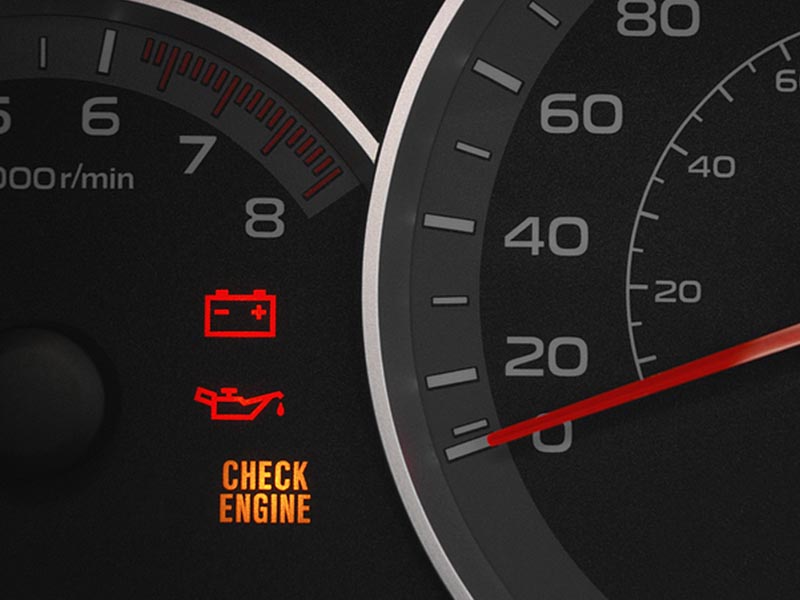
What Symptoms and Check Engine Light Codes Signal Spark Plug Failure?
Specific diagnostic trouble codes ranging from P0300 to P0308 indicate cylinder misfires directly caused by degraded spark plugs or failing ignition components. Alongside dashboard warning lights, physical driveability symptoms like surging during acceleration, engine shaking at idle, and severe drops in fuel economy provide clear evidence of ignition breakdown.
The engine control unit continuously monitors crankshaft rotation speed to evaluate cylinder balance. When a cylinder fails to fire cleanly, the sensor detects a momentary micro-deceleration in the crankshaft and triggers the check engine light. Diagnostic code P0300 signals a random or multiple-cylinder misfire, whereas codes P0301, P0302, P0303, and P0304 pinpoint the exact cylinder experiencing ignition failure. In direct-injection engines like the naturally aspirated FB25 or turbocharged FA24, an unaddressed misfire rapidly impairs performance.
Beyond warning lights, several distinct physical symptoms indicate plug degradation:
- Rough Idling and Engine Shaking: Worn electrode tips create inconsistent sparking, causing the engine to rhythmically drop RPM, vibrate heavily, or produce a popping noise at idle.
- Hesitation and Sluggish Acceleration: Stepping on the gas pedal yields a delay or jerking motion because degraded plugs struggle to ignite rich fuel mixtures under sudden load.
- Hard Starting or Extended Crank: Cold engines require a strong, crisp spark to ignite atomized fuel; worn gaps delay combustion, draining battery energy during startup.
- Increased Exhaust Emissions and Smell: Unburnt gas entering the exhaust manifold causes strong fuel odors and elevates tailpipe emissions.
Uncombusted fuel entering the exhaust stream poses severe risks to downstream emissions equipment. When raw gas reaches the hot internal substrate of a catalytic converter, it ignites inside the unit, causing extreme thermal stress that can melt internal ceramic elements. If restrictor issues affect intake airflow alongside ignition delays, replacing a clogged filter using an engine air filter replacement service helps maintain optimal air-fuel ratios while fresh spark plugs restore clean combustion.
How Often Should Spark Plugs Be Replaced Based on Mileage and Plug Type?
Spark plug replacement schedules depend on electrode metallurgy, engine design, and vehicle operating conditions, with manufacturer intervals ranging from 30,000 miles for traditional copper to 60,000 miles or 100,000 miles for iridium options. Following exact maintenance guidelines prevents electrode rounding, gap widening, and anti-seize coating breakdown inside cylinder heads.
Modern engines rely on high-durability metals to withstand high compression ratios and precise fuel metering. Factory schedules for naturally aspirated engines using iridium spark plugs specify replacement at 60,000 miles or 60 months. Higher-output turbocharged applications put greater thermal and pressure demands on ignition tips, making strict adherence to recommended intervals vital for preventing pre-ignition and knock. Older performance platforms like the EJ257 turbocharged engine frequently mandate plug service every 30,000 miles.
| Spark Plug Material | Typical Lifespan | Core Metallurgy Traits | Best Application Fit |
|---|---|---|---|
| Copper Spark Plugs | 30,000 miles to 50,000 miles | High thermal conductivity, soft nickel-alloy coating | Older vintage engines, low-voltage ignition systems |
| Single Platinum Plugs | 60,000 miles | Platinum disc on center electrode, improved wear resistance | Standard passenger cars, distributorless ignitions |
| Double Platinum Plugs | 80,000 miles to 100,000 miles | Platinum on center and ground electrodes | Waste-spark ignition systems, modern daily commuters |
| Iridium Spark Plugs | 60,000 miles to 120,000 miles | Extremely high melting point, ultra-fine center wire | Direct-injection, turbocharged, and Subaru BOXER engines |
Time plays a crucial role alongside mileage. Even when a vehicle accumulates low annual mileage, humidity and chemical combustion byproducts can cause plug threads to seize inside aluminum cylinder heads over several years. Furthermore, vehicles subjected to severe operating conditions-such as frequent short journeys where the engine rarely reaches full operating temperature-accumulate carbon deposits faster. Commuters traveling highway routes from Ocala to surrounding employment centers run engines hot enough to burn off light carbon, but routine physical inspections at scheduled intervals remain necessary to measure electrode wear.
Upgrading older vehicles from standard copper to fine-wire iridium spark plugs is generally recommended if thread pitch, reach, and heat range match factory specifications. Fine-wire iridium designs require lower voltage to jump the gap, providing consistent firing throughout their extended service life.
Does Replacing Spark Plugs Restore Fuel Economy and Protect Ignition Coils?
Installing fresh spark plugs restores lost fuel economy by eliminating incomplete combustion cycles that waste unburnt fuel. New plugs also reduce electrical resistance, protecting expensive ignition coils from overheating and premature insulation failure.
When spark plug gaps widen from normal wear, the ignition system must generate significantly higher secondary voltage to create an arc. This increased electrical demand forces individual ignition coils to operate near maximum capacity for prolonged periods. Over time, high thermal loads degrade internal coil windings and epoxy insulation, leading to coil driver failure or severe misfires. Replacing worn spark plugs at recommended intervals prevents this cascade of electrical strain, avoiding the cost of replacing both plugs and ignition coils simultaneously.
Misfires and partial combustion directly impact your wallet at the gas pump. When a spark plug fails to ignite the air-fuel mixture completely, unburnt fuel exits through the exhaust valve without producing engine torque. This forces the driver to depress the accelerator pedal further to maintain speed, lowering efficiency. Restoring crisp, immediate ignition allows the engine to extract maximum energy from every drop of fuel, restoring up to 10% in lost gas mileage and maintaining EPA-rated fuel efficiency numbers.
To ensure your engine operates at peak thermal and volumetric efficiency, you can easily schedule a service appointment online to have our factory-trained technicians test ignition coil output and inspect spark plug condition.
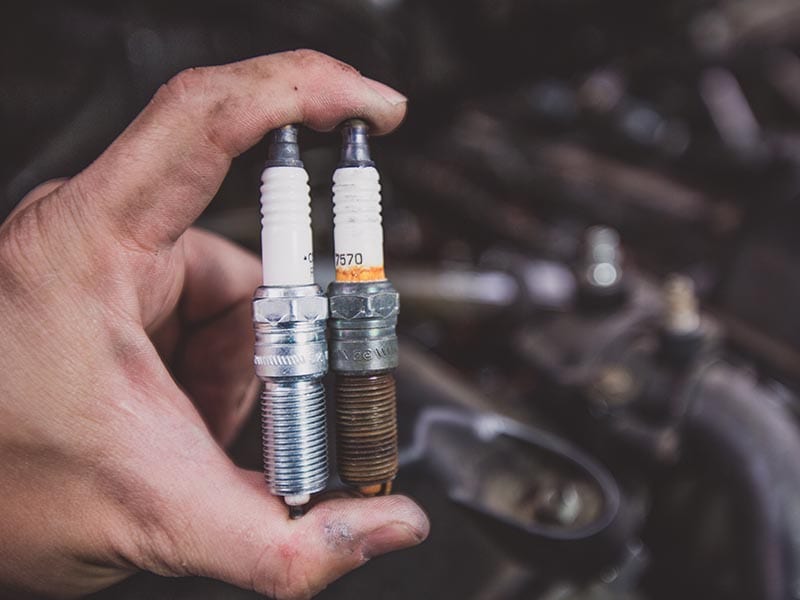
How Professional Spark Plug Replacement Protects Your Engine in Gainesville, FL
Professional spark plug service guarantees precise torque application, accurate electrode gap verification, and specialized care tailored to unique engine architectures like the horizontally opposed Subaru BOXER layout. Utilizing genuine manufacturer parts ensures correct heat ranges and prevents thread damage in lightweight aluminum engine blocks.
Replacing spark plugs on a Subaru BOXER engine presents unique technical considerations due to the horizontal cylinder orientation. Cylinder heads sit close to the frame rails, providing tight clearance that requires specialized extension sockets, swivel joints, and specific sequence steps to access the spark plug tubes safely. Our service advisors frequently see owners inquire about whether coil removal and plug extraction require lifting the engine; our certified technicians utilize specialized slim-profile tools to perform the entire service efficiently without unbolting engine mounts.
Factory-trained technicians adhere to strict technical standards during every installation:
- Torque Precision: Aluminum cylinder heads require exact torque application using calibrated torque wrenches to prevent thread stripping or loose plugs that leak combustion pressure.
- Electrode Gap Checking: Even pre-gapped iridium plugs undergo delicate feeler-gauge inspection to confirm tolerances match exact engine control unit calibration.
- Dielectric Spark Guard: Applying dielectric grease to coil boots prevents voltage arc-over and keeps rubber boots from sticking to ceramic plug insulators.
- Inspection of Plug Tubes: Technicians verify that spark plug tube seals are dry, preventing engine oil contamination from soaking ignition boots.
Using factory-certified OEM plugs guarantees that heat dissipation rates match your engine's precise combustion chamber dynamics. Off-spec aftermarket plugs with incorrect heat ranges can cause localized hot spots, leading to damaging engine knock or pre-ignition under heavy loads.
Our complete service center stands ready to maintain your vehicle's peak reliability and performance. You can conveniently order genuine OEM parts directly from our service department, call our main line at 352-565-5015 for advice, or visit our service center facility in Gainesville for expert care.
Common Questions About Subaru Spark Plug Service
Q: What happens if I delay spark plug replacement past the recommended mileage?
Delaying spark plug replacement causes the electrode gap to widen significantly, forcing your ignition coils to work harder and generate excessive heat. Prolonged operation on worn plugs leads to frequent cylinder misfires, sluggish acceleration, poor fuel economy, and potential catalytic converter damage from raw fuel entering the exhaust system. In severe cases, degraded plug tips can break apart inside the cylinder, causing catastrophic internal engine damage.
Q: Do ignition coils need to be replaced every time spark plugs are changed?
Ignition coils do not require automatic replacement during every spark plug service. Coils are built to last longer than spark plugs and are typically replaced only when diagnostic testing shows internal electrical resistance, physical cracking, or a confirmed cylinder misfire code. However, replacing spark plugs on schedule protects your ignition coils by preventing the high electrical resistance that causes coil failure.
Q: Can short daily driving trips cause spark plugs to fail faster?
Frequent short trips prevent the engine from reaching optimal operating temperatures long enough to burn off carbon deposits on the spark plug tips. Over time, carbon accumulation bridges the electrode gap or fouls the ceramic insulator, leading to cold-start misfires and rough idling. Vehicles driven predominantly on short city errands fall under severe maintenance schedules, requiring more frequent ignition system checks.
Q: How do I know if my vehicle uses iridium, platinum, or copper spark plugs?
Your owner's manual lists the exact spark plug specifications, including recommended electrode material, heat range, and part numbers. Most modern vehicles come equipped from the factory with iridium or double platinum plugs to meet long-term durability and emissions standards. Our parts specialists can also look up your vehicle's specific requirements using your Vehicle Identification Number (VIN).
Q: Why does my car shake at stoplights when the spark plugs are worn?
At idle, your engine operates at its lowest RPM, making it particularly sensitive to combustion inconsistencies. Worn spark plugs struggle to ignite the fuel mixture cleanly under low airflow conditions, causing one or more cylinders to misfire intermittently. This imbalance produces noticeable vibrations that travel through the engine mounts into the vehicle cabin and steering wheel.
Schedule Your Subaru Spark Plug Inspection Today
Maintaining fresh spark plugs is one of the most effective ways to preserve smooth performance, protect expensive engine components, and maintain maximum fuel efficiency. From preventing catalytic converter damage to ensuring immediate starting on damp mornings, adhering to factory maintenance intervals delivers long-term peace of mind on every journey.
When your maintenance schedule calls for new ignition components or you notice subtle performance changes, our factory-trained service team provides expert care using genuine OEM parts and precise installation procedures. Take the proactive step in protecting your vehicle by scheduling your service appointment online today or contacting our dedicated service advisors to keep your engine running cleanly for miles to come.
© 2026 Subaru of Gainesville. All rights reserved.
Questions About Spark Plug Service? Contact Us!
* Indicates a required field
-
Subaru of Gainesville
4025 N Main St
Gainesville, FL 32609-1402
- Sales: 352-565-5015