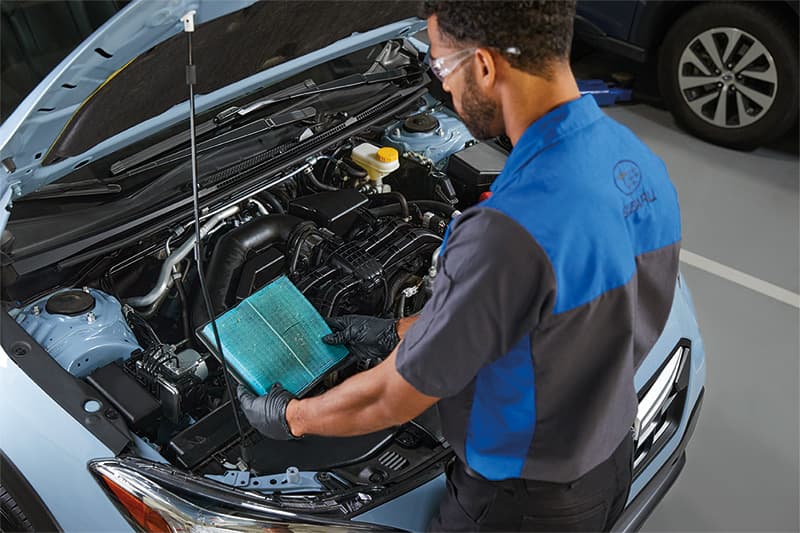
How Often Should You Replace an Engine Air Filter in Florida?
Most manufacturers recommend replacing an engine air filter every 15,000-30,000 miles, but Florida driving conditions can shorten that interval.
Here in North Central Florida, we deal with higher levels of airborne debris than drivers in many other regions. Between heavy pollen seasons, humidity, construction dust, and everyday road debris, filters can become clogged faster than expected.
Drivers from Lake City to Ocala, FL, may need to replace their engine air filters closer to every 12,000-20,000 miles, depending on driving habits and environmental conditions. Several local factors can accelerate filter wear:
- High pollen levels. Florida's long pollen seasons mean your vehicle constantly pulls microscopic particles into the engine intake system.
- Humidity and moisture. Florida's humid climate can cause filters to trap contaminants more quickly as airborne particles stick to filter material.
- Dust and road debris. Construction activity, unpaved roads, and roadside sand can introduce additional contaminants into the air your engine breathes.
- Frequent short trips. Stop-and-go driving around Gainesville neighborhoods like Hidden Lake, West Park, and Kirkwood increases engine demand and airflow through the filter.
Engine air filters are inexpensive and quick to replace, so it's smart to have them checked during routine maintenance or oil changes. If the filter appears dirty or clogged, replacing it early helps maintain engine performance and airflow.
At Subaru of Gainesville, engine air filters are checked as part of our complimentary multi-point inspection, which is included with all Express Service visits.
Does Replacing an Engine Air Filter Improve Fuel Economy?
Sometimes - depending on the condition of the old filter.
Older carbureted engines could see noticeable fuel economy improvements after replacing a dirty air filter. On modern fuel-injected engines, the vehicle's computer can compensate for restricted airflow to a degree. However, severely clogged filters can still affect performance and efficiency.
Studies have shown that replacing a clogged air filter can improve acceleration by 6-11 percent in some vehicles because airflow restrictions are removed. Other research suggests that extremely dirty filters may reduce fuel efficiency by 2-11 percent depending on the engine and driving conditions.
Even when fuel economy changes are modest, the biggest benefits of replacing a dirty air filter are:
- Improved engine responsiveness
- Better airflow for combustion
- Reduced engine strain
- Lower emissions
When you consider how inexpensive air filters are compared to engine repairs, you realize replacing your engine air filter is one of the simplest maintenance items you can do.
Signs Your Engine Air Filter May Need Replacement
Engine air filters usually don't trigger obvious warning lights until they become severely clogged. However, there are several common symptoms that may indicate it's time for replacement.
Common Warning Signs
- Sluggish acceleration
- Reduced engine power
- Lower fuel efficiency
- Rough engine operation
- Unusual engine sounds or hesitation
- Check engine light related to airflow sensors
Sometimes the easiest indicator is visual. If the filter appears dark, dirty, or packed with debris, it's likely time for replacement. Drivers in areas with heavy pollen seasons or dusty conditions may notice filters becoming dirty faster than expected.
Engine Air Filter vs Cabin Air Filter: What's the Difference?
Many drivers confuse the engine air filter with the cabin air filter, but they serve very different purposes.
Engine Air Filter
- Protects the engine from dirt and debris
- Maintains proper airflow for combustion
- Helps support engine performance and efficiency
Cabin Air Filter
- Filters air entering the vehicle's interior
- Improves air quality inside the cabin
- Removes dust, pollen, and pollutants for passengers
Both filters are important, but the engine air filter directly affects how your engine runs.
Engine Air Filter Replacement for Most Makes and Models
While Subaru vehicles are known for durability and reliability, every internal combustion engine depends on clean airflow. Our service team replaces engine air filters for most makes and models, including Subaru, Toyota, Honda, Nissan, Ford, Chevrolet, Hyundai, Kia and many more.
Using high-quality replacement filters ensures the proper balance between airflow and filtration. This keeps contaminants out while allowing your engine to breathe freely.
Multi-Point Inspections Included with Express Service
Whenever you bring your vehicle to Subaru of Gainesville for Express Service, our technicians perform a complimentary multi-point inspection. This inspection includes checking important components such as:
- Engine air filter condition
- Fluid levels
- Brake components
- Battery health
- Tire condition and pressure
Multi-point inspections help identify small issues before they become expensive problems, keeping your vehicle running safely and efficiently.