What Airborne Contaminants Does a Cabin Air Filter Capture and How Does It Protect Your HVAC?
A cabin air filter captures airborne particulate matter including grass pollen, fine road dust, diesel soot, mold spores, insect fragments, and environmental haze before outside air reaches the passenger compartment. High-efficiency filtration media traps solid particles as small as a few microns, shielding vehicle occupants from breathing concentrated outdoor pollutants during highway travel and urban idling.
By arresting these particles at the air intake, the cabin filter serves as a physical barrier for the heating, ventilation, and air-conditioning system. Unfiltered air allows fine dust and damp organic debris to bypass the intake housing and collect on the fins of the air-conditioning evaporator core. When moisture from atmospheric condensation mixes with accumulated dirt on the evaporator, it forms a thick layer of sludge that restricts air passage, reduces thermal exchange efficiency, and fosters fungal growth.
Restricted airflow across a clogged filter forces the blower motor to pull against elevated static pressure. Over time, this extra resistance increases electrical current draw through the fan motor, raising operating temperatures and accelerating mechanical wear on the motor bearings. Maintaining a clean filter ensures balanced airflow rates across both the heating core and cooling evaporator, allowing the climate control system to maintain desired cabin temperatures without unnecessary strain. Owners replacing their own maintenance components can ensure proper fitment by ordering genuine Subaru cabin air filters directly from our parts department.
What Are the Signs of a Dirty Cabin Air Filter vs. an Engine Air Filter?
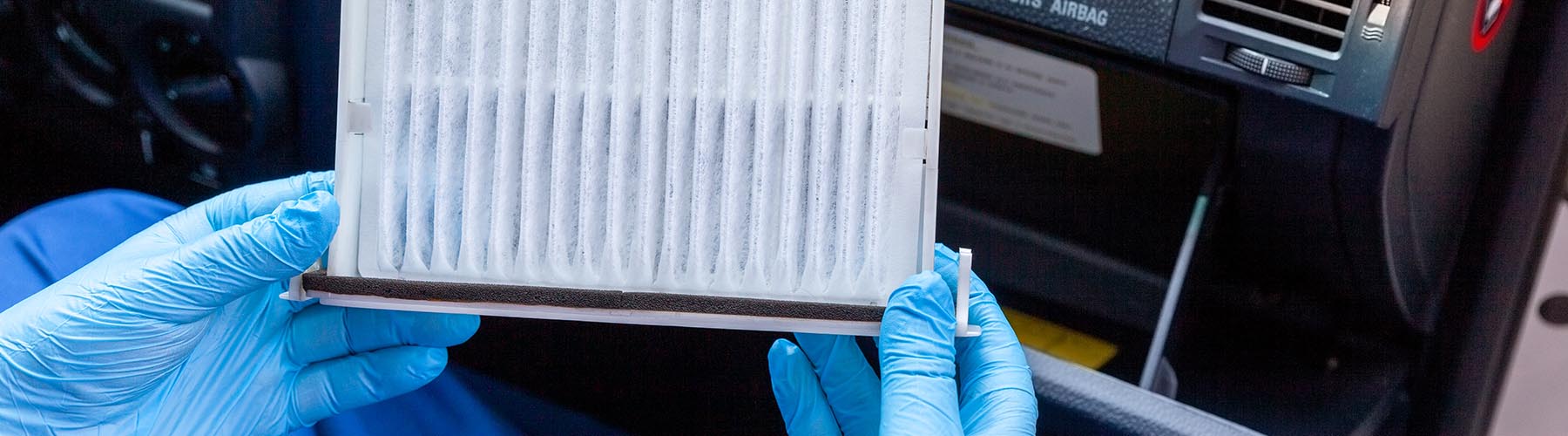
 A dirty cabin air filter causes weak ventilation airflow from the dashboard vents, persistent musty smells inside the cabin, slow windshield defogging, and unusual humming or whistling fan noises. In contrast, a dirty engine air filter restricts air entering the combustion chamber, resulting in sluggish acceleration, diminished fuel economy, engine hesitation, and potential engine misfires under heavy acceleration.
While both components rely on pleated filter media to trap debris, their operational roles and installation locations are entirely distinct:
- Location and Intake Source: The cabin air filter sits inside the ventilation housing behind the glove compartment or cowl area, processing air destined for human breathing. The engine air filter sits under the hood inside a sealed plastic airbox connected directly to the engine intake manifold.
- Airflow Volume and Pressure: The engine air filter must handle high volumetric airflow rates demanded by combustion, operating under variable engine vacuum. The cabin filter operates under constant blower fan pressure to maintain stable interior ventilation.
- Primary Symptoms of Clogging: Restricting the cabin filter weakens climate control output and degrades interior air freshness. Restricting the engine filter starves the engine of oxygen, forcing the powertrain control module to adjust fuel delivery ratios.
Drivers stopping in for routine checkups often ask whether a sour air-conditioning smell indicates a compressor failure, but technicians usually identify a saturated cabin filter holding damp organic material as the direct cause. Because these filters perform separate jobs, they are not interchangeable in size, shape, or filtration specification. Keeping both filters clean ensures optimal powertrain power alongside crisp interior climate comfort. Drivers noticing reduced throttle performance alongside ventilation issues can arrange complete engine service including engine air filter replacement services with our factory-trained technicians.
What Are the Different Types of Cabin Air Filters Available for Your Subaru?
Subaru vehicles utilize standard synthetic particulate cabin filters, activated carbon cabin filters, and high-efficiency HEPA-rated filtration media depending on owner preferences for dust suppression and odor neutralization. Standard particulate filters feature electrostatically charged synthetic fibers designed to capture solid debris like dirt and pollen, whereas activated carbon filters embed a layer of treated charcoal that chemically absorbs exhaust fumes, sulfur compounds, and unpleasant environmental odors.
| Filter Type | Primary Filtration Mechanism | Odor Absorption | Best Suited For |
|---|
| Standard Particulate | Electrostatic Synthetic Media | Minimal | General suburban commuting and dust control |
| Activated Carbon | Charcoal-Infused Layer | High | Heavy traffic, agricultural zones, industrial odor zones |
| HEPA-Rated Media | Ultra-Fine Glass/Synthetic Mesh | Moderate to High | Allergy sufferers and high-pollen environments |
Selecting the appropriate filter media depends heavily on local driving environments. Commuters navigating unpaved access roads near equestrian farms around Ocala benefit significantly from activated carbon media, which stops fine dust while neutralizing organic odors before air enters the cabin. High-efficiency media options ensure that even during heavy pollen spikes, interior air remains clean for sensitive passengers.
When reviewing overall vehicle ownership and passenger comfort, interior air management plays a key role alongside chassis performance and drivetrain safety. For instance, when comparing the Subaru Crosstrek with the Toyota Corolla Cross, driver visibility and cabin environmental control complement standard Subaru Symmetrical All-Wheel Drive for all-weather confidence. Combining filter replacement with a routine Subaru oil change service streamlines regular maintenance into a single visit, maintaining both mechanical engine health and cabin air purity.
Common Questions About Cabin Air Filter Care
Q: How often should a cabin air filter be replaced in Florida?
Subaru factory service guidelines recommend replacing the cabin air filter every 12,000 to 15,000 miles or once every 12 months under standard conditions. However, Florida drivers facing elevated spring pollen, seasonal humidity, and unpaved back roads should inspect the filter every 6,000 miles and replace it sooner if visual loading or vent restriction occurs.
Q: Does a clogged cabin air filter cause low AC airflow?
Yes, a severely clogged cabin air filter restricts the physical volume of air that the blower fan can pull into the HVAC system. As debris fills the pleated filter material, static pressure rises, resulting in a noticeable drop in air velocity coming from the center and side dashboard vents.
Q: Can a dirty cabin filter create unusual whistling or humming fan noises?
A restricted or damaged cabin filter can produce whistling noises as air forces its way through tiny gaps around the clogged surface. Additionally, leaves or twigs trapped against the filter media can drop into the blower motor cage, causing an imbalanced ticking or humming noise when the fan rotates.
Q: Are cabin air filters and engine air filters interchangeable?
No, cabin air filters and engine air filters are engineered for completely different vehicle systems and are non-interchangeable. Cabin filters fit specific auto HVAC housings inside the dashboard to treat air for passengers, while engine air filters fit underhood airboxes to filter combustion intake air.
Q: Where is the cabin air filter located in most Subaru models?
In most modern Subaru models, the cabin air filter is located directly behind the passenger glove box compartment. Accessing the filter housing typically requires releasing the glove box damper arm and side retaining pegs, allowing the glove box to drop forward to reveal the filter access door.
Schedule Your Certified Subaru Cabin Air Filter Service Near Gainesville
Maintaining a fresh cabin air filter protects your vehicle heating and cooling system while ensuring clean, odor-free air for every passenger on board. Replacing a saturated filter restores maximum air-conditioning output, reduces strain on the blower motor, and eliminates trapped allergens before they enter the cabin.
Our service department provides complete HVAC system care using genuine OEM Subaru cabin air filters designed specifically for your model's exact fitment specifications. Whether your vehicle requires routine maintenance or a detailed multi-point inspection, our factory-certified technicians ensure your vehicle receives precise attention using specialized tools and factory procedures.
To schedule your next cabin filter inspection or routine service, get directions to our dealership at 4025 N Main St, Gainesville, FL 32609-1402. You can also reach our service team directly by calling 352-565-5015 to speak with an advisor and reserve a convenient service time.
© 2026 Subaru of Gainesville. All rights reserved.

 A dirty cabin air filter causes weak ventilation airflow from the dashboard vents, persistent musty smells inside the cabin, slow windshield defogging, and unusual humming or whistling fan noises. In contrast, a dirty engine air filter restricts air entering the combustion chamber, resulting in sluggish acceleration, diminished fuel economy, engine hesitation, and potential engine misfires under heavy acceleration.